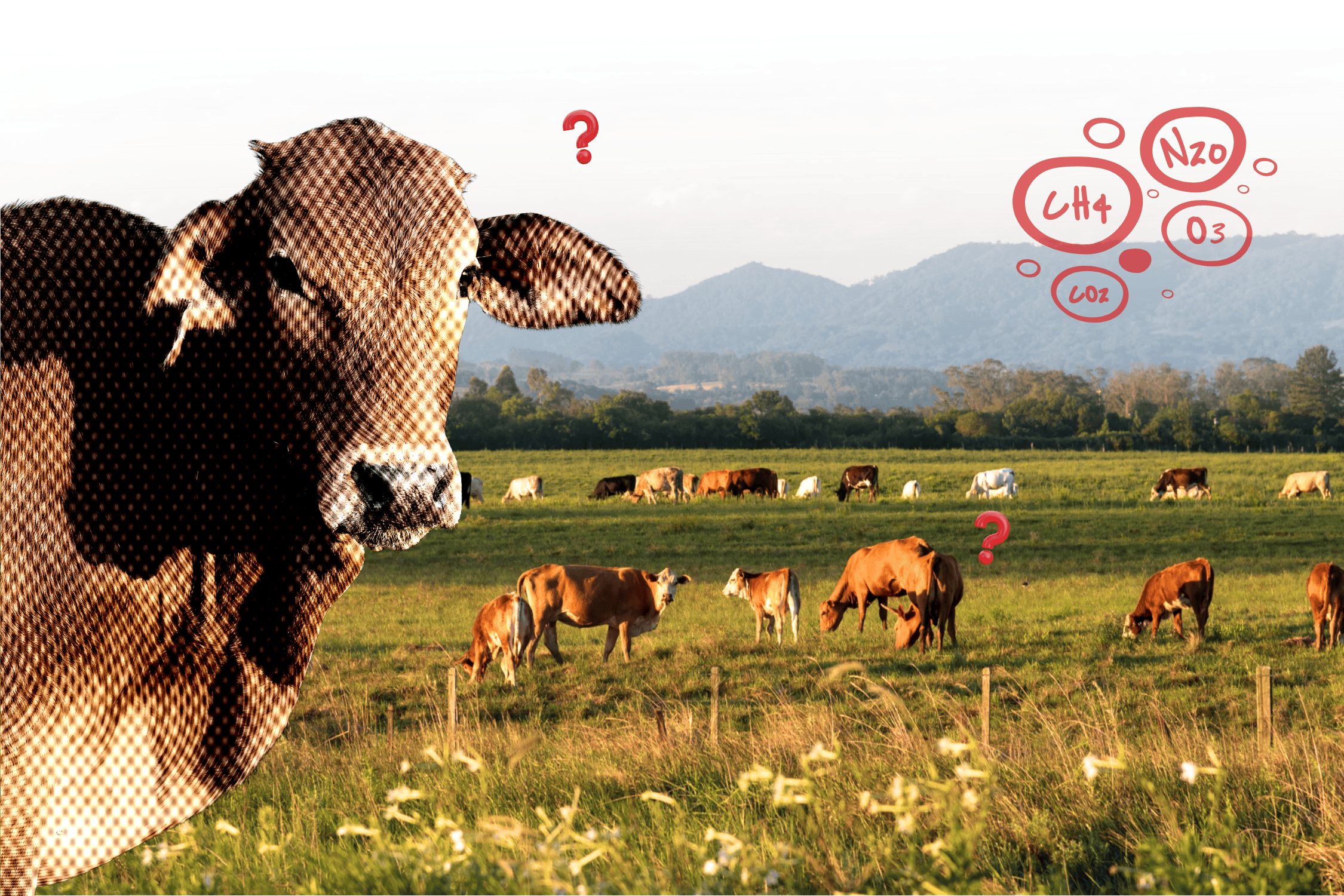
Does the Livestock Sector Significantly Contribute to Greenhouse Gas Emissions?
Have you ever considered that livestock could be a major contributor to global emissions? According to the Food and Agriculture Organization (FAO), the livestock sector accounts for approximately 14.5% of total global greenhouse gas (GHG) emissions. This places livestock among the largest emission sources worldwide, with cattle identified as the primary contributors within the sector.
Why Are Cattle the Main Source?
Cattle are a leading source of greenhouse gas emissions due to their unique digestive system. They produce methane through a natural biological process known as enteric fermentation. Unlike humans, cattle possess a specialized stomach compartment called the rumen, which enables them to digest grass and fibrous plant materials through microbial fermentation.
This fermentation process generates methane (CH₄), which is released into the atmosphere primarily through belching, as well as flatulence and manure. As global cattle populations continue to grow, methane emissions from livestock have become an increasingly significant environmental concern.
Why Does Methane Matter?
Methane is a potent greenhouse gas with a global warming potential approximately 25 times greater than carbon dioxide (CO₂) over a 100-year period. Although methane exists in lower concentrations than CO₂, its impact on global warming is substantially stronger per unit of emission.
Given the large global cattle population, the cumulative effect of methane emissions from livestock plays a direct role in increasing atmospheric greenhouse gas concentrations and accelerating climate change. Addressing methane emissions is therefore critical in global climate mitigation efforts.
Is Greenhouse Gas Monitoring Necessary?
Accurate and real-time emissions monitoring is a crucial first step toward developing effective mitigation strategies. With advanced environmental monitoring technologies, gases such as methane can be measured with greater precision. Reliable data enables governments, industries, and communities to make evidence-based decisions aimed at reducing climate impact.
GHG’s Monitor Innovation
Technology plays a vital role in addressing this challenge. GHG’s Monitor offers a solution for real-time measurement and monitoring of greenhouse gas concentrations.
GHG’s Monitor is designed to:
- Detect and measure gases such as CH₄ (methane), CO₂, and other greenhouse gases
- Provide accurate data for industrial, agricultural, and livestock applications
- Support decarbonization and sustainability strategies
Through integrated, data-driven monitoring systems, the livestock sector can identify, measure, understand, and manage its emissions effectively. The issue of livestock emissions does not mean the sector must be eliminated, but rather better managed. In environmental management, what cannot be measured cannot be managed.